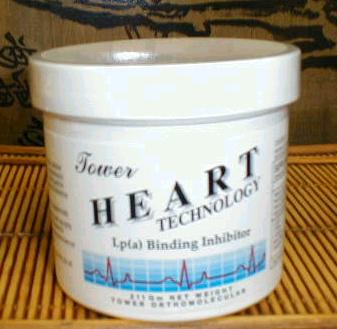
"I think so. Yes. Now I've got to the point where I think we can get almost complete control of cardiovascular disease, heart attacks and strokes by the proper use of vitamin C and Lysine. It can prevent cardiovascular disease and even cure it. If you are at risk of heart disease, or if there is a history of heart disease in your family, if your father or other members of the family died of a heart attack or stroke or whatever, or if you have a mild heart attack yourself then you had better be taking vitamin C and Lysine."
During the last decade, 2-time Nobel Prize winner Pauling and his associate and heart researcher Dr. Matthias Rath, M.D., independently formulated their own assessment regarding the cause and nature of occlusive heart disease. They agree that heart disease is essentially a repair process that is started by a lesion; their theory explains the primary reason these lesions occur. Accordingly, CVD is a natural body healing process for the walls of arteries and veins weak from insufficient collagen, a condition caused by inadequate vitamin C in the diet.
Since vitamin C is a powerful anti-oxidant, it would be a prudent remedy even if either the oxidized cholesterol or oxidized homocysteine theories have merit. Experiments are needed to determine whether either oxidized substance is dangerous when the body pool of vitamin C is high, such as the case with most animals.
"A study of 1,605 randomly selected man in Finland, aged 42 to 60 years, was conducted between 1984 and 1989. None of the men had evidence of pre-existing heart disease. After adjusting for other confounding factors, men who were deficient in vitamin C had 3.5 times more heart attacks than men who were not deficient in vitamin C. The scientists's conclusion was, "Vitamin C deficiency, as assessed by low plasma ascorbate concentration, is a risk factor for coronary heart disease." British Medical Journal (Vol 314, Iss 708, 1997)
Furthermore, recent German reports, as mentioned by the American Heart Association, credit vitamin C in the blood stream with "almost completely" reversing "endothelial dysfunction" in smokers. In other words, ascorbic acid prevents damage to the walls of blood vessels that may lead to heart disease.
These two scientists performed careful laboratory experiments on animals in order to test their theory. They were able repeat earlier experiments and induced atherosclerosis in guinea pigs by restricting the intake of vitamin C to the U. S. RDA (adjusting for body weight).This time, Pauling and Rath measured Lp(a) levels in the animals.
Over time, roughly five weeks in these animals, vitamin C restriction leads to poor production of the protein collagen; ultimately, blood vessels lose strength, causing the lesions that result in the arterial healing process we call atherosclerosis. Microscope pictures show the animal lesions mimic the human form of the disease. Lp(a) levels in animals deprived of vitamin C were shown to rise as decribed in their 1994 U. S. Patent.
Animals in the control group that were fed the same except for the addition of a human equivalent of 3 to 5 gm of vitamin C per day showed no signs of atherosclerosis. Lp(a) remained low in these animals.
The subject of intense scientific scrutiny, these scientist's insight about the "missing link" in heart disease -- the coagulating healing factor lipoprotein(a) -- has been confirmed during a reevaluation of The Framingham Heart Study.
Dr. Pauling stated that, "if you have more than 20mg/dl of lipoprotein-(a) in your blood it begins depositing plaques, causing atherosclerosis."
According to Dr. Rath, studies show that special diet does not influence lipoprotein(a) blood levels. Vitamin C and vitamin B3 (niacin) can lower blood levels of lipoprotein(a).
Furthermore, according to Dr. Rath, significant documentation attests that:
"Vitamins belong to the most powerful agents in the fight against heart disease. This fact has been established by studies of thousands of people over many years. Here are some important results of recent clinical studies: Vitamin C cuts heart disease rate almost in half (documented in 11,000 Americans over ten years) Vitamin E cuts heart disease rate by more than one third (documented in 36,000 Americans over six years.) Beta Carotene (provitamin A) cuts heart disease rate almost in half (documented in 36,000 Americans). No prescription drug has ever been shown to help prevent heart disease similar [vitamins A, C and E]. These results and those of countless other studies are so clear that anybody questioning the value of vitamins in the prevention of heart disease may safely be considered as uninformed."
© 1997 - 2003 by Herbal Advantage, Inc.
131 Bobwhite Road, Rogersville, Missouri, 65742, USA
Telephone: 417-753-4000 or 800-753-9199, Fax: 417-753-2000
Last Updated: 08-17-02 by SJM